Tuesday, 5 March 2013

Working with databases - searching and adding new records:

A database is a collection of information stored in an organised way so that you can find what you are looking for immediately. The database provided in this blog post could be a flatfile database or a simple relational database.

Flatfile database:
A databse held as a single table. It is structured with a row for every record.

Relational database:
A database that uses more than one table. Tables are linked together by common data items, such as ID number, known as keys.
                                                                                                                                   

The database I am using in this blog post is here:


Finding a specific region; e.g. South East:


Finding a number greater than a given value; e.g. greater than £10: 


 Finding a number less than a given value; e.g. less than £10:


Finding a value in a particular range; e.g. finding all the activities with entry costs of between £5 and £10: 

 Finding all values except a particular value; e.g. all activities outside Wales:


The number of records that satisfy the criteria Entry Cost<£8.50 were 358:

 Below are the names of all of the attractions in East Anglia:


Destinations
Name
Audley End House and Gardens
Blickling Hall
Kentwell Hall
Sandringham Estate
The Cressing Temple Barns
Adventure Island
Bedford Museum
Verulamium Museum
Strikers Ten Pin Bowling
Holkham Hall
Hatfield House
Ascott House and Gardens
Cambridge Museum of Technology
Royston Cave
Hertfordshire Sports Village
Splash Sheringham
Colchester Leisure World
Go Ape
Sea Life Centre Great Yarmouth
Wooside Animal Farm and Leisure Park
Deben Swimming Pool
Extreeme Adventure
Oasis Beach Pool
Colchester Zoo
Paradise Wildlife Park
Africa Alive!
Amazona Zoo
Banham Zoo
Bedford Butterfly Park
English School of Falconry
Hunstanton Sea Life Sanctuary
Linton Zoo
Mole Hall Wildlife Park
Pensthorpe Nature Reserve
Sealife Adventure
Sheringham Park
The Raptor Foundation
Whipsnade Zoo
Grimes Graves
Muckleburgh Collection
Norwich Castle
Bewilderwood
Dinosaur Adventure
Hoo Hill Maze
Manning's Amusement Park
Pleasurewood Hills
Regal Movieplex
Walton Pier
Colchester Castle Museum
Imperial War Museum
Merrivale Model Village
Museum of East Anglian Life
Nelson Museum and Tour
Sedgewick Museum of Earth Sciences
Yesterday's World
Bassingbourn Snowsports Centre
Wells Beach Leisure
Aqua Splash
Bressingham Steam Experience
Wells Harbour Railway
Mississippi Paddle Boat

Below are the attractions which satisfy the criteria Entry Cost>5 and Region="South East":


Destinations
Name
Hever Castle
Guildford Spectrum
Worthing Aquarena
Thorpe Park
Windsor Castle
Adventure Farm
Amazon World
Ashdown Forest Llama Park
Beale Park
Bird World
Blackgang Chine
Butterfly & Fountain World
Cotswold Wildlife Park and Gardens
Drusillas Park
Earnley Butterfly Park
Howlett's Wild Animal Park
Isle of Wight Zoo
Port Lymphne Wild Animal Park
Surrey Hills Llamas Trek
The British Wildlife Centre
Wildwood
Oxford Castle Unlocked
Spinnaker Tower
Chessington World of Adventures
Lego Land
Paultons Family Theme Park
Robin Hill Country Adventure Park
Tree Jumpers Sky Park
Amberley Working Museum
Dickens World
Milestones-Living History Museum
The Look Out Discovery Centre
The Museum of Kent Life
Hampton Court Palace
Blenheim Palace
Bucks Railway Centre
Leeds Castle
Gulliver's Land
Canterbury Tales
The Ice Bowl


Amazon database:


In the book section of Amazon's database, the fields include:
  • the title - gives the name of the book.
  • the price - lets the potential customer know whether or not it is in their price range.
  • the author - gives the credit to the writer of the book.
  • the publisher - gives the credit to the publisher of the book.
  • image(s) - gives the potential customer an idea as to what the book looks like/includes.
  • customer review(s) - lets the potential customer discover what other customers thought of the book before they purchase it.
  • search terms - lets the potential customer search for other products using keywords.
  • product details - gives the potential customer an idea of what they are considering purchasing.
  • product description - gives the potential customer an idea of what the product includes.

Tuesday, 26 February 2013

Unit 2: E-Commerce Online Shopping

This blog post's aim is to show you the process involved when purchasing items online.
I am using Tesco's website.
__________________________________________________________________________

Tesco: Homepage:


 ___________________________________________________________________________

Tesco: Sign in or register:


___________________________________________________________________________

Tesco: Registration:


___________________________________________________________________________

Tesco: Thank you for registering:


___________________________________________________________________________

Tesco: Welcome to Tesco.com Groceries:


___________________________________________________________________________ Tesco: Search results:


__________________________________________________________________________
 Tesco: Multisearch:


___________________________________________________________________________

Tesco: Add item to shopping basket:


___________________________________________________________________________

Tesco: Shopping basket:


___________________________________________________________________________

Tesco: Choose your shopping method:


___________________________________________________________________________

Tesco: Home delivery:

___________________________________________________________________________

Tesco: Click & collect:

___________________________________________________________________________

Tesco: Delivery saver:
t
___________________________________________________________________________

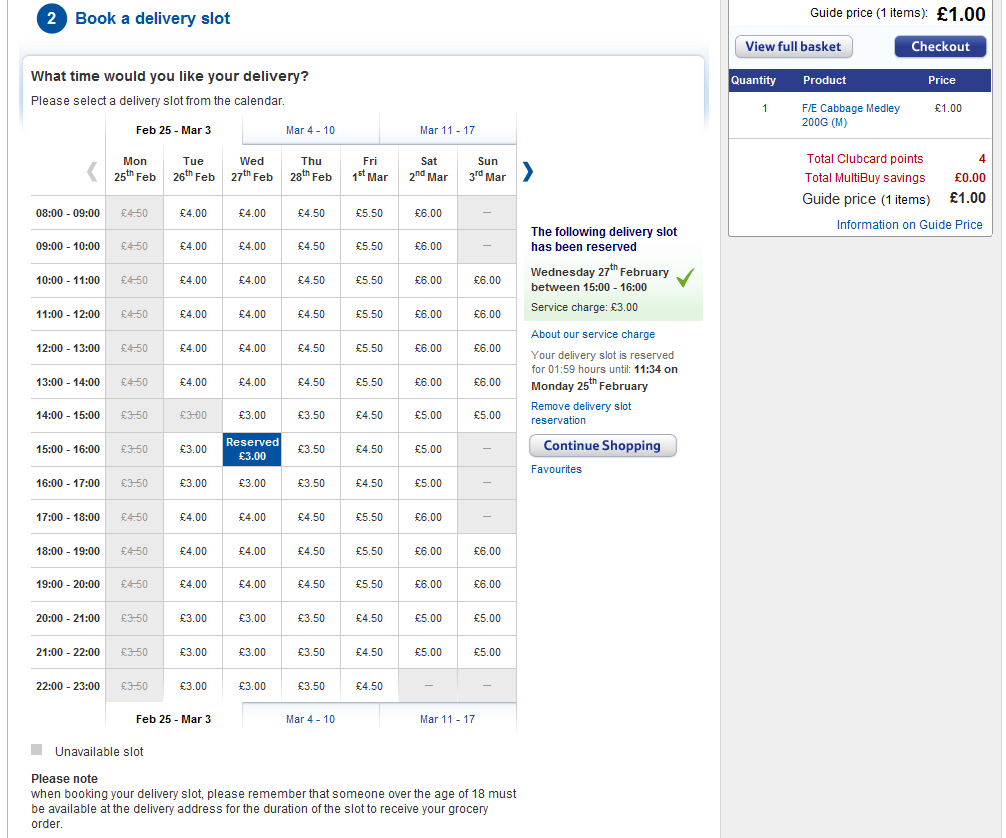
Tesco: Home delivery: Book a delivery slot:


___________________________________________________________________________ Tesco: Home delivery: Leave instructions:


___________________________________________________________________________
 Tesco: Checkout - Order summary:


___________________________________________________________________________
 Tesco: Checkout - Payment:
___________________________________________________________________________ Tesco: Problems entering your account details:


___________________________________________________________________________ Tesco: Forgotten your password?:
___________________________________________________________________________
Tesco: Need help signing in?:
___________________________________________________________________________

If you forget your account information but still want to log into the website, you can click on "Need help signing in?" or "Forgotten your password" to access your account information. These processes work by sending your account information to your email address. This would be secure because if it were not, people would lose faith in the website and would not use it, thus causing the company to lose money.
                                                                                                                                  

When you are registering on the website, first you must give your email address, your postcode and your clubcard number, (which is optional), before sharing your name, contact details, your desired password and "more about you". The company need your information so that they can build up a profile on you, understand what sort of items you buy, and ways to make more money from their customers - this is a marketing strategy. The company can sell your data to their partners, thus making more money but this could result in you getting unwanted messages from other companies.

You purchase an item on the website by navigating through the items and adding whichever ones you want to your shopping basket. Then you can either enter your card details at the checkout to purchase your goods.
The payment process involves the customer entering their payment details - the name on their card, the card number, the expiry date (month and year), and the security code - the cardholder's address/contact details, and any clubcard vouchers or eCoupons.
The customer can have their purchased items delivered to them or they can collect them from their local branch of the company. 
There does not seem to be a tracking option on the Tesco website since it is not really needed. If you are collecting your items, you will know where they are - your local supermarket. If you are having your items delivered, you will have chosen a time slot to have them delivered so will know where they are and when they will arrive anyway - you would not need a tracking system.


Supermarket websites - and large companies in general - make their money using marketing techniques and strategies.
Supermarket websites record everything you order online, and use that over time to build up a profile of you and what you like to buy regularly. If you buy items A, B and C together on a regular basis, the websites may try to persuade you to buy items X, Y and Z too, as a marketing technique. These items will be someway related to what you normally get and will probably be more expensive - if not now, then some time after once you buy them regularly.
Furthermore, the profile that is built up on you will also show, not only what you are buying but also how often you buy them and how much you are spending on them - for example, whether you are only buying value or top of the range goods, etc.
Also, some websites will also be able to prompt the customer into buying more items. For example: "We notice you haven't bought any of ********** recently - do you want some?" and the website puts a link to the item(s) just before you go to pay which can often persuade customers to spend more money.
With a very large company like Tesco, there are many different "departments" on the website. The information gathered on there can be used elsewhere within the group to see how the customer can be persuaded to spend more money.
Some (smaller) companies may also look at selling off your information to others - their "partners" - which will make more money. This is the reason that some websites have a checkbox asking whether or not you give consent for them to share your information with "carefully selected partners".
In terms of the payment process, the customer can obviously store their credit card details on the website for ease of use - this may encourage impulse buying which, again, gives the company more money - and they will also tie it in with any loyalty cards they already have so, again, the companies really can keep on top of all of your purchases, history and habits, etc.
Lastly, in terms of "ongoing" purchases - such as using Tesco to order your groceries every week - the company will effectively insist that you register a profile with them as they need your address and phone number, etc. The customer cannot just make a one-off purchase and delivery like many other types of e-retailer will do. That way, the company get both the customer's details and their money.


Flowchart to show how the Tesco website works:

Monday, 4 February 2013

Unit 2: The Digital Economy - Clicks and Mortar

Below is a table which shows internet sales rising rapidly from December 2006 to December 2012. Internet sales have been rising faster than any other part of the economy as people prefer to shop online nowadays. As you can see below, the number of internet sales peaks from September to December as many more people use internet shopping to buy Christmas presents.


The article below is about internet sales for different companies. It shows that the internet market is changing because, using Thorntons as an example, its overall sales have increased "by 5.4 per cent on year to £88million in the quarter to January 12", but that stores "carrying the Thorntons name sales slumped 9 per cent" which shows that more people are shopping online.

The article below is about internet sales for different companies. It shows that the internet market is changing because of the "closure of a VAT loophole" which, for the company Play.com, has made "more than 200 staff redundant" because a "scheme will allowed items unde £15 to be sold to Britain free of VAT" has ended.


The article below is about internet sales for different companies. It shows that the internet market is changing because, as stated below, "internet shopping was up 50 per cent" which allowed a "13.9 per cent expansion in floor space".


Activity 7 - Consider the advantages and disadvantages of online grocery shopping:

Advantages:
  • saves petrol
  • shops 24 hours a day, every day
  • don't have to queue up
  • see all the special offers in one place
  • don't need a car
  • can pick up items from previous shopping lists to avoid forgetting essentials
  • can compare prices with ease
  • can complete a large repeat order very quickly
  • don't have to go out in bad weather
Disadvantages:
  • miss out on manager's bargains
  • have to stay in awaiting delivery
  • have to phone up a call centre when an incorrect item is picked
  • have to rely on someone else's judgement when substituting items
  • have to pay more, especially for small loads
  • can't feel the food to check on ripeness
  • it is harder to return inadequate goods
                                                                                                                                                                  

Activity 8 - Compare online grocery stores:

Tesco, Asda, Sainsbury's, Morrisons, Marks & Spencer, Aldi, Co-operative Store, Waitrose and Lidl are the main supermarket chains in the United Kingdom.
Common features of all of these are that they provide their customers with 24 hour a day shopping, often cheaper and with special offers all found in one place. The customer is also able to set up their own account on the website, which allows the companies to profile their users. Recipes are also offered on the majority of the websites, (e.g. Waitrose, Lidl, etc), and all of the websites offer a store finder.
However, the content found on these websites varies.
On the Tesco website, fresh food & groceries, clothing and the Tesco bank can be found.
On the Asda website, groceries, entertainment, clothing and baby items can be found.
On the Sainsbury's website, food & drink, home & garden, appliances, technology, entertainment, toys & nursery, sport & leisure, and finance can be found.
On the Morrisons website, food & drink, wine and baby items can be found.
On the Marks & Spencer website, lingerie, beauty, clothes, furniture, food & wine, flowers & gifts, Valentine's day items and the Marks & Spencer bank can be found.
On the ALDI website, bakery, ales, larger and cider, spirits, wine, frozen food, Fairtrade products, chocolate, mother & baby items, and pet food can be found.
On the Co-operative website, food, insurance, electricals, pharmaceuticals, travel, funeral care, legal services and the Co-operative bank can be found.
On the LIDL website, tools, toys, property and groceries can be found.
I prefer the Marks & Spencer website as it offers all of the following, which is more than all of the other supermarkets' websites:


This seems to be the most useful website as everything is arranged easily into one place and has multiple drop-down menus, making navigation around the website easy. A screenshot showing one of the drop-down menus which offers many more features:

Monday, 28 January 2013

Tesco - An example of large internet website & positive/negative press task

 
Tesco is one of the major supermarket chains in the United Kingdom, along with Asda, Sainsbury's, Morrisons, Marks & Spencer, Aldi, Co-operative Store, Waitrose and Lidl. Tesco has the largest share of the supermarket sales figures at 31%, while Asda and Sainsbury's have only 17% each.
 

In these articles the reader is shown how people have "fallen out of love slightly" with Tesco and that it "may have lost touch with its customers by trying to be more efficient".
Tesco came to be when, almost a century ago, "Jack Cohen began selling surplus groceries from a market stall in London's East End in 1919". He made "£1 profit on sales on £4 in one day" which, nowadays, has escalated to the market stall becoming a "supermarket giant" with "global revenues of more than £40billion".
Some people dislike Tesco because they think that it has become "tired and a bit boring", saying that the "shopping experience has fallen behind some of its rivals" due to the fact that "marketing campaigns have been lacking in energy and enthusiasm" which is unattractive to British shoppers.
Furthermore, the company is planning to expand into 14 countries. This could also be a problem due to Tesco's "consistent focus on global growth" which has "left the stores back home, which make up two third of its business, looking tired".
Tesco's "FTSE 100 improved by nine per cent, meaning an overall market under performance of 24 per cent". Tesco has "fallen into the gap of being too sterile for its own good". Tesco has taken its "eye off the ball".
Additionally, people may also dislike the company at the moment after Tesco's "Horse meat Scandal" which can be found here. If customers feel like they are being tricked into buying something which they did not want to purchase - i.e. horse meat in what should have been a beef burger - then, no matter that there were no health risks, they may stop shopping there and find somewhere else, causing Tesco to lose customers and profit to its rivals.
Here are some more articles concerning the recent discovery of horse meat entering the Tesco Value Product line, with hypothesis on how long the problem will last: